
925 Sterling Silver vs. Brass Jewelry: 5 Proven & Best Tips for Your Brand
When analyzing 925 sterling silver vs brass jewelry for your next collection, selecting the primary base metal is one of the most critical decisions for your business.
While solid gold and platinum cater to high-end luxury markets, 925 sterling silver vs brass jewelry remains the core debate for brands competing in affordable luxury, fashion, and demi-fine markets. Both metals offer distinct advantages in terms of cost, durability, hypoallergenic properties, and perceived retail value.
At YZERISE, as a specialized custom jewelry manufacturer, we produce bespoke collections in both sterling silver and high-grade brass. Here is an in-depth breakdown of 925 sterling silver vs brass jewelry to help you choose the ideal material for your brand’s next launch.
1. Material Composition & Precious Metal Status
Understanding the basic metallurgy helps define your product’s market positioning:
- 925 Sterling Silver: Sterling silver is an officially recognized precious metal composed of 92.5% pure silver and 7.5% alloy metals (usually copper) to increase strength. It carries inherent commodity value and is stamped with the official “925” hallmark.
- Brass: Brass is a base metal alloy composed primarily of copper and zinc. While it lacks precious metal classification, modern high-grade brass used in custom jewelry production is specially formulated to be durable, smooth, and easily workable.
Key Takeaway: If your brand positions itself in the Demi-Fine segment, 925 Sterling Silver is mandatory due to its precious metal status and hallmark recognition.
2. Hypoallergenic Properties & Skin Safety
Skin sensitivity is a top concern for retail consumers. Allergic reactions—such as green skin discoloration or contact dermatitis—are usually caused by trace impurities like nickel.
- 925 Sterling Silver: Naturally hypoallergenic and nickel-free. It is safe for daily wear, sensitive skin, and body piercings.
- Brass: Brass contains a higher copper content and can react with skin acidity or sweat, occasionally causing green discoloration if left uncoated. However, when protected by thick electroplating and a high-grade anti-tarnish e-coating, brass jewelry remains safe and comfortable for skin contact.
At YZERISE, all our silver and brass alloys strictly comply with international safety regulations, including EU REACH Compliance and California Proposition 65 standards—guaranteeing 100% lead-free, cadmium-free, and nickel-free manufacturing.
3. Electroplating Standards & Anti-Tarnish Longevity
Both sterling silver and brass are frequently electroplated with 18K Gold, 14K Rose Gold, or Rhodium to achieve varied color palettes and luxury finishes.
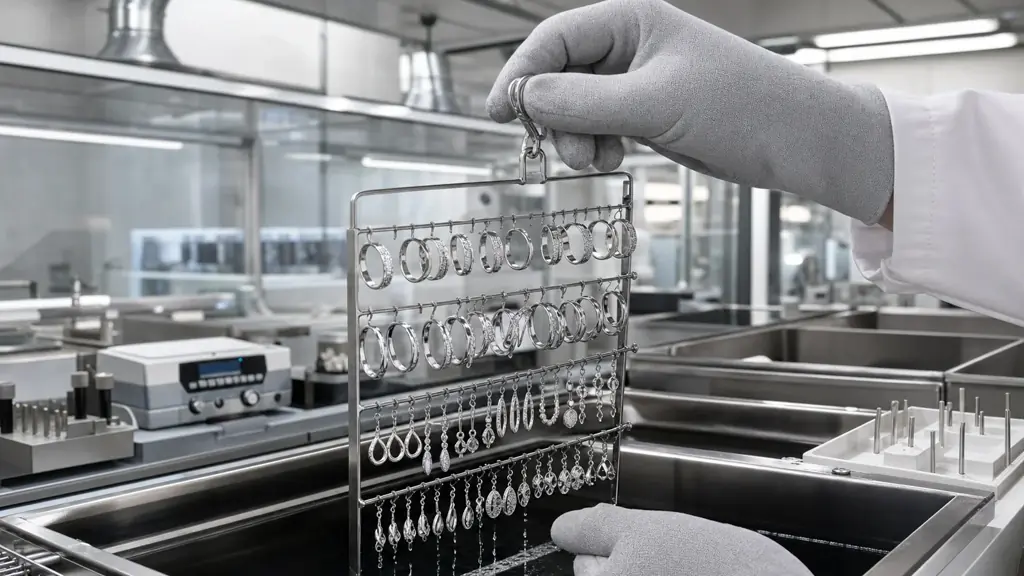
- Silver Plating Dynamics: Sterling silver forms a strong molecular bond with gold electroplating. Over time, as the gold layer gradually wears, the exposed base metal is white sterling silver, which remains aesthetically pleasing and easy to polish.
- Brass Plating Dynamics: Brass requires a specialized barrier layer (such as palladium or nickel-free copper) prior to gold plating to prevent copper migration. When properly plated with 1.0 to 2.5 microns of real gold plus an advanced e-coating, brass jewelry maintains its shine long-term.
4. Production Cost & Pricing Flexibility
Cost structure is often the ultimate deciding factor when evaluating 925 sterling silver vs brass jewelry for high-volume retail lines.
- 925 Sterling Silver: As a traded commodity, silver’s raw material price fluctuates with global spot market rates. It carries a higher unit manufacturing cost, allowing brands to command higher retail price points ($40 – $150+ USD).
- Brass: Brass offers significantly lower raw material costs, making it the ideal choice for trendy, high-volume fashion jewelry, promotional merchandise, or fast-fashion lines ($15 – $45 USD retail).
📊 925 Sterling Silver vs Brass Jewelry: Summary Comparison Matrix
| Feature / Criteria | 925 Sterling Silver | High-Grade Brass |
| Metal Category | Precious Metal | Base Metal Alloy |
| Hallmark Recognition | Yes (“925” Stamped) | No Hallmark |
| Hypoallergenic Safety | Excellent (Naturally Safe) | Good (Requires Quality Barrier Plating) |
| Unit Manufacturing Cost | Moderate to Premium | Budget-Friendly / Low Cost |
| Ideal Market Segment | Demi-Fine & Premium Jewelry | Trend, Fashion & Promotional Lines |
Which Material to Choose: 925 Sterling Silver vs Brass Jewelry?
Choose 925 Sterling Silver if:
- You want to build a long-term premium or demi-fine brand image.
- You require official “925” hallmark stamping.
- Your customers prioritize hypoallergenic, daily-wear jewelry.
- You need complex custom jewelry 3D CAD modeling for fine gemstone settings.
Choose High-Grade Brass if:
- You are launching high-volume fashion trend collections.
- You need bold, chunky statement pieces where silver weight would make the item cost-prohibitive.
- You want to maximize profit margins on promotional product lines.
Manufacture Your Custom Silver & Brass Jewelry with YZERISE
Whether you decide on 925 sterling silver, premium brass, or a combination of both across different collections, YZERISE has the engineering capabilities and production capacity to bring your designs to life. (If you are evaluating production facilities, read our checklist on how to choose the right custom jewelry manufacturer.
- 💎 Certified Material Purity & 100% Hypoallergenic Compliance
- ⚡ Advanced Vacuum Casting & 18K Gold Electroplating
- 📐 Fast 48-Hour 3D CAD Turnaround & Rapid Prototyping
Ready to Start Your Next Collection?
Send us your sketches or tech packs today for expert material advice and direct factory pricing!
- Official Website: yzerise.com
- Corporate Email: hazlitttheodore@outlook.com
- WhatsApp / Direct Line: +86 133 1882 2259